


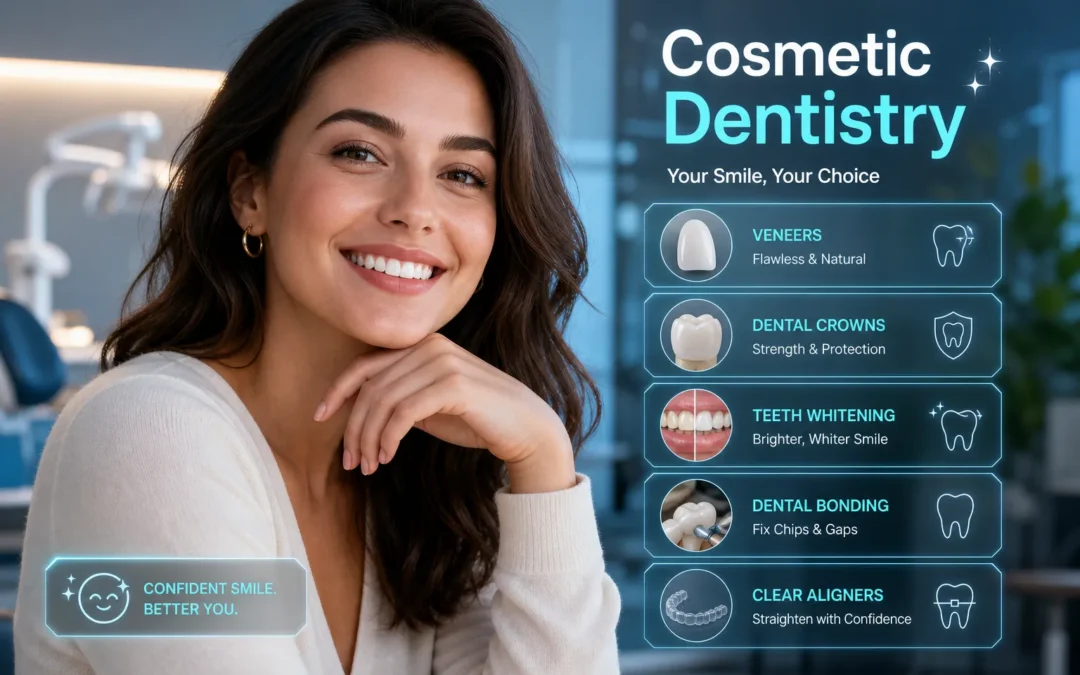
If you’ve been wondering what are the best cosmetic dentistry options for adults, you’re far from alone. Picture this: you’re sitting in a dental chair, phone in hand, scrolling through before-and-after smile photos. One person got whitening. Another got veneers. A third got implants. You have absolutely no idea which one you actually need, or whether any of them fit your budget or your life. You close the app, smile awkwardly at the ceiling tiles, and feel more confused than when you started.
That moment happens at our practice, Fancy Smiles Dental Studio, pretty much every week. Adults come in with a general sense that they want to improve their smile, and they leave with an actual plan. Knowing your options is the first step toward making a confident decision. This guide walks through the most popular cosmetic dental procedures available to adults in 2026: what they cost, how long results last, who’s a real candidate, and the exact questions that separate a mediocre consultation from a great one.
What Are the Best Cosmetic Dentistry Options for Adults?
You don’t need to memorize every cosmetic procedure ever invented. You just need a working mental map of what exists so you can ask smarter questions when you sit down with a dentist. Think of it as knowing the menu before you walk into the restaurant. The best cosmetic dentistry options for adults span a wide range of price points, commitment levels, and clinical approaches, so understanding the landscape helps you narrow in quickly.
Whitening and dental bonding: the accessible starting points
Professional teeth whitening and dental bonding for adults are the two most accessible entry points for anyone who wants a real, visible change without a major commitment. Whitening addresses both surface stains and deeper, intrinsic discoloration through bleaching agents applied in-office or through custom take-home trays. Dental bonding uses tooth-colored composite resin to correct chips, close small gaps, or adjust the shape of a tooth in a single appointment with minimal removal of existing tooth structure. Both procedures are repeatable as needed, which makes them especially practical if you’re testing the cosmetic waters for the first time.
Porcelain veneers and smile makeovers
Porcelain veneers sit in the middle-to-premium tier of cosmetic dentistry, and they’re the most-requested treatment at practices focused on aesthetic outcomes. A veneer is a thin, custom-crafted shell bonded to the front surface of a tooth to change its color, shape, size, or length. They’re ideal when whitening won’t reach certain types of staining (fluorosis or tetracycline stains, for example), when teeth have minor chips or wear, or when small gaps need closing without braces. A full smile makeover using 6 to 10 porcelain veneers is the most comprehensive option for a total aesthetic overhaul. Composite veneers are a lower-cost alternative completed in a single visit, though they have a shorter lifespan and slightly less natural translucency than porcelain. For readers who want a side-by-side comparison, this article on composite veneers vs porcelain veneers provides a helpful deeper dive into pros and cons.
Implants, clear aligners, and gum contouring
On the more structural end of the cosmetic spectrum, dental implants for missing teeth use titanium fixtures topped by a natural-looking crown to fully restore both function and appearance. Clear aligners like Invisalign straighten misaligned or crowded teeth using a series of removable trays, and they work just as well for adults as they do for teenagers. For a fuller comparison of adult options, see our Best Teeth-Straightening Options for Adults: A Clear Guide. Gum contouring reshapes an uneven or excessive gum line that makes teeth appear short or asymmetrical. These treatments often come first in a phased treatment plan, because the way your teeth align and how your gums frame them directly affects how any cosmetic work looks and how long it lasts.
What these treatments actually cost: a realistic breakdown
Cost is almost always the question adults are already thinking but feel awkward saying out loud. You shouldn’t feel awkward. Cosmetic dental work is a real financial commitment, and knowing the ballpark figures before you walk in helps you plan with actual confidence instead of sticker shock.
The budget-friendly tier: whitening, bonding, and composite options
Professional in-office whitening runs between $250 and $800 per session, while custom take-home whitening kits from your dentist cost $100 to $400. Dental bonding falls in the $200 to $800 per tooth range depending on complexity. Composite veneers (the single-visit, resin-based option) run $250 to $1,500 per tooth. These are the treatments that deliver meaningful aesthetic results without requiring a multi-year savings plan, and they’re a smart starting point if your concerns are relatively minor or if you want to see how cosmetic work feels before committing to a larger investment. If you’re deciding between DIY approaches and dentist-provided methods, our Home Remedies Vs Professional Dental Treatments guide explains the tradeoffs clearly.
Mid-range to premium: porcelain veneers and implants
Porcelain veneers cost $900 to $2,500 per tooth, with a full smile makeover landing between $7,500 and $20,000 or more depending on how many teeth are involved and your location. Dental implants run approximately $4,000 to $5,200 per unit as a complete system. Clear aligner treatment for a full case typically costs $3,000 to $7,000. These are long-term investments with correspondingly longer lifespans, and framing them that way usually helps the math feel less alarming.
One more thing worth knowing: nearly all cosmetic dental procedures are elective, meaning insurance won’t cover them. That makes transparent pricing and a clear payment plan a baseline expectation at any reputable consultation. At Fancy Smiles Dental Studio, adults without insurance can access the in-house adult savings plan at $299 per year, which covers preventive visits and provides a 15% discount on additional treatments. It’s a practical way to offset costs while pursuing cosmetic goals.
How long do results last, and what does upkeep look like?
The real question about longevity isn’t just “how many years does this last?” It’s “what does my daily life need to look like to protect this investment?” The difference between a 5-year result and a 20-year result often comes down to habits, not materials. That gap is more significant than most people expect when they’re first exploring their options.
Longevity by procedure: what the numbers actually mean
Professional whitening results last 6 months to 3 years depending heavily on diet and whether you use tobacco. Dental bonding holds up for 5 to 10 years. Composite veneers average 5 to 7 years. Porcelain veneers last 10 to 25 years with proper care, making their higher upfront cost much more reasonable when you divide it across their lifespan. Dental implants for missing teeth are in a class of their own: the titanium fixture can last 20-plus years or even a lifetime, while the crown on top may need replacement after 10 to 15 years of normal wear. Clinical literature supports these general ranges, see this recent review on adhesive and restorative longevity for more detail. The value equation becomes a lot clearer when you see those numbers side by side.
The daily habits that protect your investment
For veneers and bonding, a soft-bristled toothbrush and non-abrasive toothpaste are essential. Abrasive whitening toothpastes scratch the surface of both porcelain and composite over time. Alcohol-free mouthwash protects the bonding agent that holds your restorations in place. If you grind your teeth at night, a custom nightguard is critical. Unmanaged bruxism is one of the most common reasons veneers and bonding fail ahead of schedule, no matter the material quality. Across every procedure without exception, six-month professional cleanings keep the margins of your restorations healthy and allow your dentist to catch early issues before they become expensive ones. For practical tips on maintenance and ways to extend the life of veneers, read this guide on how to make veneers last. The adults who see the longest-lasting results aren’t always the ones with the biggest budgets. They’re the ones who follow through on the fundamentals.
Are you a good candidate? What your dentist checks first
Knowing whether you’re ready for cosmetic work right now, or whether you need some preparation first, is one of the most empowering things you can learn in a consultation. It’s not discouraging information. It’s practical information that helps you prepare smarter.
The oral health baseline every candidate needs
Every cosmetic procedure, without exception, requires healthy gums and cavity-free teeth as a starting point. Active gum disease, untreated decay, insufficient enamel from erosion, or unmanaged bite issues must be resolved before any cosmetic work is placed. This isn’t a technicality. Veneers placed on a patient with unmanaged bruxism or active periodontal disease will fail ahead of schedule regardless of how skilled the dentist is or how good the materials are. For a clear explanation of typical candidacy requirements, see this resource about who is a candidate for dental veneers. Addressing those foundational issues first is what makes cosmetic results last.
How age, lifestyle, and health history shape your options
Age alone doesn’t disqualify anyone from cosmetic dentistry. Oral health status does. Younger adults tend to gravitate toward whitening and clear aligners, and their higher bone density makes implant outcomes especially predictable when needed. Middle-aged adults often address years of accumulated wear through veneers and crowns. Older adults frequently combine restorative work (implants, crowns) with cosmetic goals as a single cohesive treatment plan. Lifestyle factors like smoking, nighttime grinding, and dry mouth (a common side effect of many medications) all influence material selection and healing timelines. Thinner enamel in older adults also affects which whitening strength a dentist recommends and which adhesive systems work best for dental bonding for adults. A thorough health and lifestyle history isn’t just paperwork. It’s the foundation of a treatment plan that actually holds up.
How to Choose the Best Cosmetic Dentistry Options for Adults: Your Consultation Checklist
A cosmetic consultation is most useful when you show up prepared to advocate for yourself, not just nod along to a treatment menu. These questions give you a framework for doing exactly that.
The questions that separate a good consultation from a great one
Bring these with you to any cosmetic dentistry appointment:
- What is my current oral health baseline, and does anything need to be addressed before cosmetic treatment?
- Which procedures are best matched to my specific concerns, given my tooth structure and health history?
- What does the total cost look like, including follow-up care and long-term maintenance?
- How long will results realistically last given my lifestyle?
- Are there phased options if I want to spread treatment over time?
- Can I see before-and-after photos of cases similar to mine from your own patients?
These aren’t confrontational questions. They’re the questions a well-informed patient asks, and any dentist worth working with will welcome every single one of them.
Why a personalized plan beats picking treatments on your own
Choosing a cosmetic procedure based on before-and-after photos or a social media trend without a full clinical assessment is one of the most reliable ways to end up unhappy with the outcome. A beautiful result depends on the right treatment applied to the right set of teeth for the right patient goals. At Fancy Smiles Dental Studio, cosmetic consultations are built around individual adult patients: your oral health, your priorities, and your real budget, whether that means a single whitening session or a comprehensive smile makeover. The goal isn’t to upsell. It’s to build a plan you can actually commit to and feel good about. Booking a cosmetic consultation is how you move from “I want a better smile” to “here’s exactly how we’re going to make that happen.” If you’d like ongoing tips and patient-focused articles, visit the Fancy Smiles Dental Blog.
FAQ: What Are the Best Cosmetic Dentistry Options for Adults?
Is cosmetic dentistry worth it for adults over 50?
Absolutely. Age is not a disqualifying factor. Oral health status is. Many adults over 50 combine restorative and cosmetic treatments into a single plan that addresses both function and appearance at the same time. A thorough consultation will clarify exactly what’s appropriate for your specific situation.
What’s the most affordable cosmetic dentistry option?
Professional teeth whitening and dental bonding for adults are typically the most accessible entry points, with costs starting around $100 to $250 depending on the approach. Both deliver visible results without the commitment of more involved procedures.
How do I know if I need veneers or whitening?
Whitening works well for surface stains and some intrinsic discoloration. Veneers are a better fit when teeth have chips, wear, shape irregularities, or staining that bleaching can’t resolve. A clinical exam is the only reliable way to determine which option fits your specific teeth.
Does dental insurance cover cosmetic procedures?
Most cosmetic dental procedures are elective and not covered by standard dental insurance. Some restorative work with cosmetic benefits (such as implants or crowns) may have partial coverage depending on your plan. Ask your provider for a pre-treatment estimate before committing.
Ultimately, there’s no single universal answer to what are the best cosmetic dentistry options for adults. There’s the best option for your teeth, your goals, and your life. The adults who feel most confident in their smile decisions are the ones who walked into their consultation knowing what questions to ask and what to expect. That preparation doesn’t take long, but it makes every difference. If you’re ready to have that conversation, Fancy Smiles Dental Studio is built for exactly this kind of thoughtful, personalized guidance. Your smile plan starts with one appointment.