


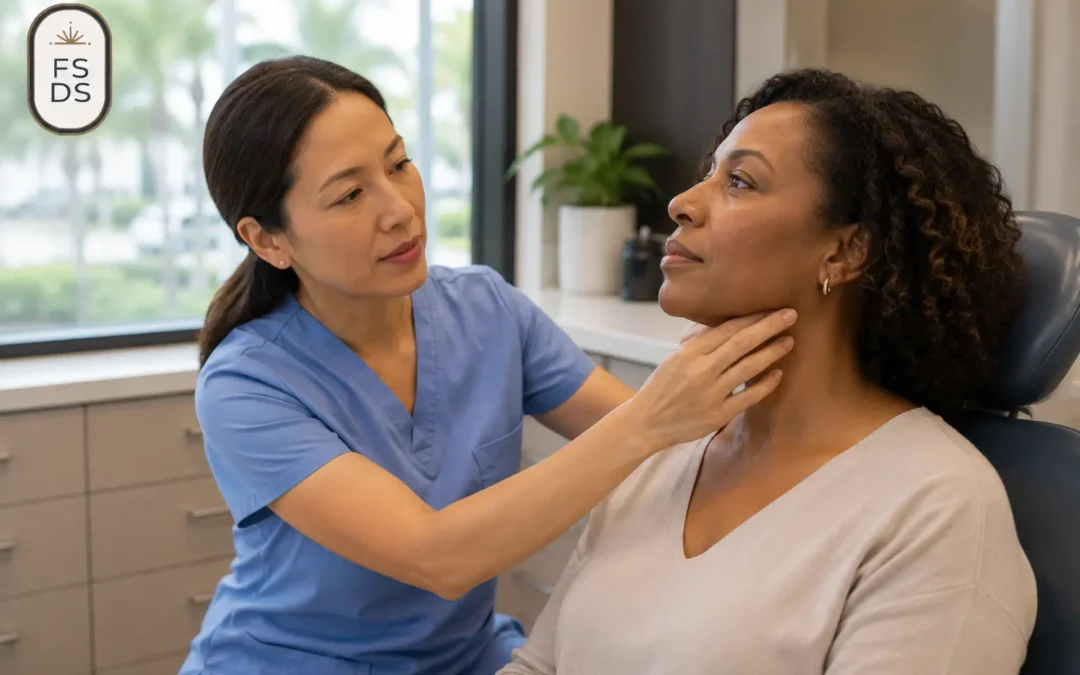
When you go in for a routine cleaning, cancer is probably the last thing on your mind. But your dentist may be doing something quietly important during that visit: screening your mouth for early signs of cancer. So can a dentist detect cancer or lymphoma during an exam? To a point, yes — and that early look can be lifesaving. The key is understanding the difference between detecting something suspicious and actually diagnosing it.
What your dentist checks during an oral cancer screening
Most routine dental checkups include a brief oral cancer screening, often so quick you may not notice it. Your dentist visually inspects your lips, tongue, cheeks, gums, the floor and roof of your mouth, and the back of your throat, then uses their hands to feel for lumps or hard spots in your mouth, jaw, and neck — including the lymph nodes. Because dentists are often the first to notice the signs of oral cancer, they’re trained to look for things like:
- Sores that don’t heal within two to three weeks
- Red or white patches on the lips, gums, tongue, or lining of the mouth
- Lumps, thickening, or rough, crusted areas of tissue
- Swellings or firm, enlarged lymph nodes in the neck or under the jaw
How a dentist can detect cancer — but not diagnose it
This is the crucial distinction. A dentist can spot something that looks abnormal, but they can’t confirm whether it’s cancer. If they find a suspicious area, they’ll refer you to an oral surgeon or specialist for a biopsy — a small tissue sample examined in a lab by a pathologist. That biopsy is what actually diagnoses (or rules out) cancer. In other words, your dentist is a frontline screener, not the person who makes the final call.
What about lymphoma and other conditions?
Because dentists feel the lymph nodes in your neck and jaw, they may notice nodes that are persistently enlarged, firm, or don’t move normally — which can occasionally be an early clue to conditions like lymphoma. Again, your dentist doesn’t diagnose these; they flag what seems off and refer you to a physician for proper evaluation. The value is in catching something early enough to get you to the right specialist.
Who’s at higher risk
Anyone can develop oral cancer, but risk is higher with tobacco use (smoked or chewed), heavy alcohol use, HPV infection, significant sun exposure (a risk for lip cancer), older age, and a weakened immune system. If any of these apply to you, regular screenings matter even more — and mention them to your dentist.
Why the routine screening matters so much
Oral cancer is far more treatable when it’s caught early — the sooner a dentist can detect cancer, the better your outlook. A lesion found at a routine checkup — before it causes pain or spreads — has dramatically better outcomes than one discovered late. That’s the whole point of the screening: it costs you a couple of extra minutes and can make an enormous difference.
Frequently Asked Questions
1. Does every dental checkup include a cancer screening?
At most practices, a visual and hands-on oral cancer screening is a standard part of a routine exam. If you’re unsure, it’s completely reasonable to ask your dentist to walk you through it.
2. If my dentist finds something, does that mean I have cancer?
No. Most suspicious spots turn out to be harmless. A finding simply means it’s worth a closer look — usually a referral for a biopsy to know for sure.
3. Can a dentist diagnose oral cancer on the spot?
No. A dentist can identify a concerning area, but only a biopsy and lab analysis can diagnose cancer. Your dentist’s job is early detection and referral.
4. How often should I be screened?
For most people, at each routine checkup — typically every six months. If you have higher-risk factors, your dentist may suggest a closer watch.
A routine visit is one of the simplest ways to stay ahead of a serious problem. The team at Fancy Smiles Dental Studio in Boynton Beach includes an oral cancer screening as part of your care — schedule your checkup and let us keep an eye on more than just your teeth.