


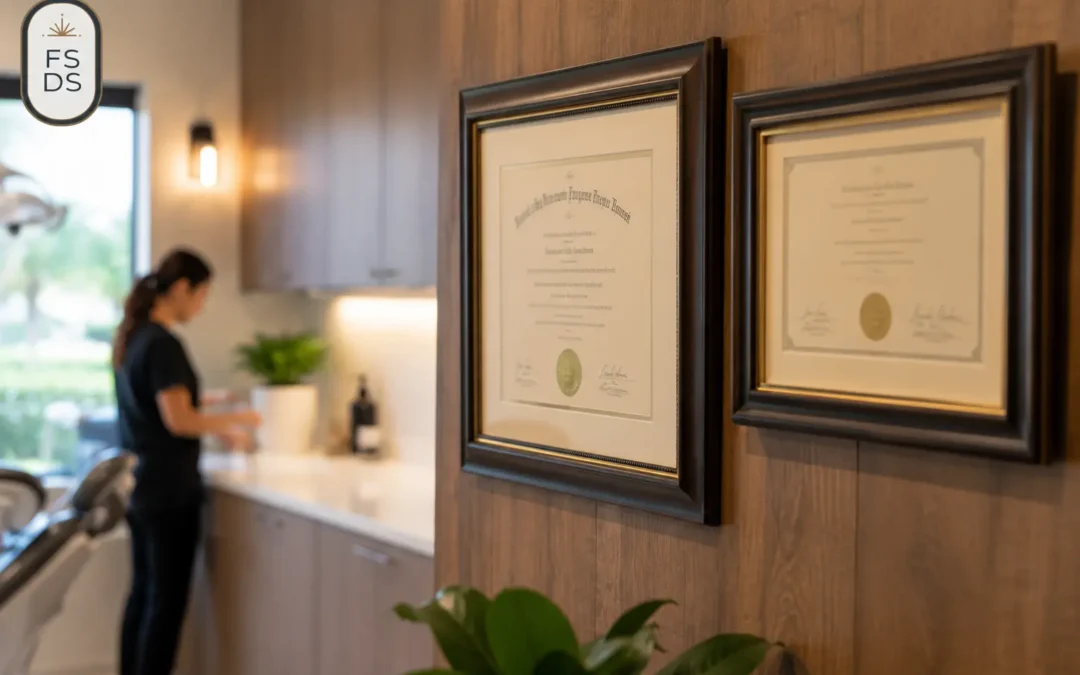
When you’re choosing a dentist, the letters after their name and the certificates on the wall can be confusing. Understanding dentist credentials helps you tell which qualifications actually signal quality care, and which are just background detail. Here’s what matters and what doesn’t.
DDS vs. DMD: Same Degree, Different Letters
The two most common titles you’ll see are DDS (Doctor of Dental Surgery) and DMD (Doctor of Dental Medicine). Despite the different names, they’re the same degree, dentists with either title complete the same training and can perform the same procedures. Which one a dentist holds simply depends on the school they attended, so it’s not a mark of quality either way.
What Dental School Requires
Every practicing dentist has graduated from an accredited dental school. In the U.S., that typically means eight years of education, four years of undergraduate study plus four years of dental school, followed by passing national and state licensing exams. Licensure is the true baseline: it means your dentist is legally qualified to treat you.
Board Certification: What It Signals
Board certification goes beyond the minimum. As the Cleveland Clinic explains, certification from bodies like the American Board of General Dentistry or the Academy of General Dentistry means a dentist passed rigorous written, oral, and clinical exams after dental school. It’s a voluntary commitment to a higher standard, and a meaningful credential to look for.
Specialist Credentials
Dental specialists, such as orthodontists, endodontists, and oral surgeons, complete an additional two to three years of residency beyond dental school, for 10 to 11 years of training total. If you need specialist care, board certification in that specific specialty is the credential that matters most.
Memberships That Signal Commitment
Membership in organizations like the American Dental Association (ADA) or the Academy of General Dentistry isn’t the same as certification, but it does show a dentist stays engaged with continuing education and current standards. It’s a positive sign, just not a substitute for licensure or board certification.
Which Dentist Credentials Actually Matter to You
For everyday care, prioritize these in order: an active state license (non-negotiable), then board certification or active continuing education, then relevant experience with the specific treatment you need. Awards and “best of” badges are nice but easy to obtain, don’t weight them heavily.
How to Check a Dentist’s Credentials
You can verify a dentist’s license through your state dental board, and most practices list their dentists’ education, certifications, and memberships on their website. Don’t hesitate to ask directly, a confident, qualified dentist is happy to share their background.
Meet Your Boynton Beach Dental Team
Choosing a dentist you can trust starts with understanding their qualifications, and asking questions. Contact Fancy Smiles Dental Studio in Boynton Beach to learn about our team and schedule a visit.
Frequently Asked Questions
1. Is a DDS or a DMD better?
Neither, they’re the same degree. DDS and DMD dentists complete identical training and can perform the same procedures. The difference is only in what the dental school chose to call the degree.
2. What does board certified mean for a dentist?
It means the dentist voluntarily passed additional rigorous exams beyond dental school, through a body like the American Board of General Dentistry. It signals a commitment to a higher standard of care.
3. Which dentist credentials matter most?
An active state license is the essential baseline. After that, board certification, continuing education, and relevant experience with your specific treatment matter most.
4. How can I check if a dentist is licensed?
Verify licensure through your state dental board. Most practices also list credentials on their website, and you can always ask the office directly.
5. Do memberships like the ADA mean a dentist is better?
Membership shows engagement with current standards and continuing education, which is a positive sign, but it isn’t a substitute for licensure or board certification.